
 Pin this
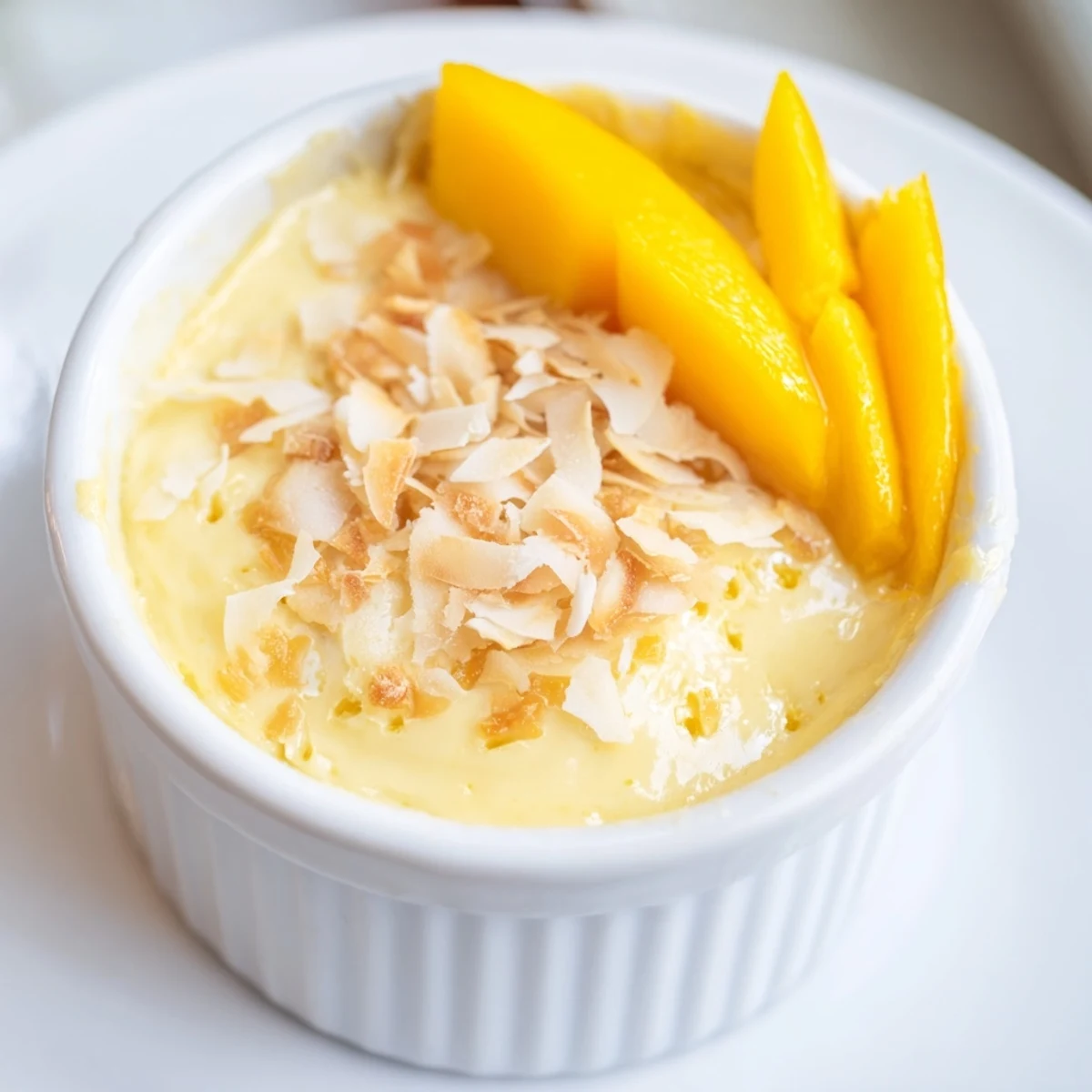
 This traditional Thai dessert combines coconut milk with eggs and palm sugar, steamed until silky smooth. The result is a rich, creamy custard with a delicate wobble that melts in your mouth. Perfect for anyone seeking a naturally dairy-free and gluten-free sweet treat that feels indulgent yet light.
The steaming technique creates the signature texture—dense yet velvety, without the crisp top of baked custards. Palm sugar lends subtle caramel notes, while full-fat coconut milk provides luxurious creaminess. Serve chilled with fresh mango for an authentic experience, or enjoy plain to savor the pure coconut flavor.
The first time I had Thai coconut custard was at a crowded night market in Bangkok, where an elderly grandmother handed me a small steaming cup from a weathered metal steamer. It was midnight, humid and alive with sounds of sizzling woks, but that silky custard stopped me in my tracks with its impossibly smooth texture and coconut perfume. Now whenever I make this at home, the steam curling up from the pot takes me right back to that plastic stool under string lights.
Last summer, I made these for a dinner party when the temperature outside was unbearable and turning on the oven felt impossible. My friend Sarah took one bite and immediately asked for the recipe, saying it reminded her of a dessert she had in Chiang Mai years ago but could never quite recreate. Something about that gentle steam method captures coconut flavor in a way baking never does.
Ingredients
- 4 large eggs: Room temperature eggs blend more smoothly into the coconut milk without creating foam
- 200 ml full fat coconut milk: The canned stuff works perfectly, just shake well and avoid light versions
- 100 g palm sugar: This adds caramel notes, but brown sugar works in a pinch if that is what you have
- 1/4 tsp fine sea salt: A tiny pinch makes all the coconut flavor sing
- 1 tsp vanilla extract: Optional but lovely, especially if you cannot find fresh pandan
- 2 tbsp toasted shredded coconut: Adds crunch against the silky smooth custard
- Fresh mango or lychee: Sweet tropical fruit pairs beautifully with the rich coconut base
Instructions
- Mix the custard base:
- Whisk the eggs just until combined, then gently fold in the coconut milk, palm sugar, salt, and vanilla until everything dissolves into a smooth, pale yellow mixture.
- Strain for silkiness:
- Pour the custard through a fine mesh sieve into a measuring cup or jug to catch any bits of cooked egg and ensure the final texture is completely smooth.
- Portion into ramekins:
- Divide the mixture evenly among four small heatproof ramekins or cups, filling each about three quarters full.
- Steam gently:
- Set up your steamer with water barely simmering, carefully place the ramekins inside, cover, and let steam for 25 to 30 minutes until just set with a slight wobble in the center.
- Chill completely:
- Cool to room temperature first, then refrigerate for at least one hour so the custard firms up and the flavors meld together.
- Add the finishing touches:
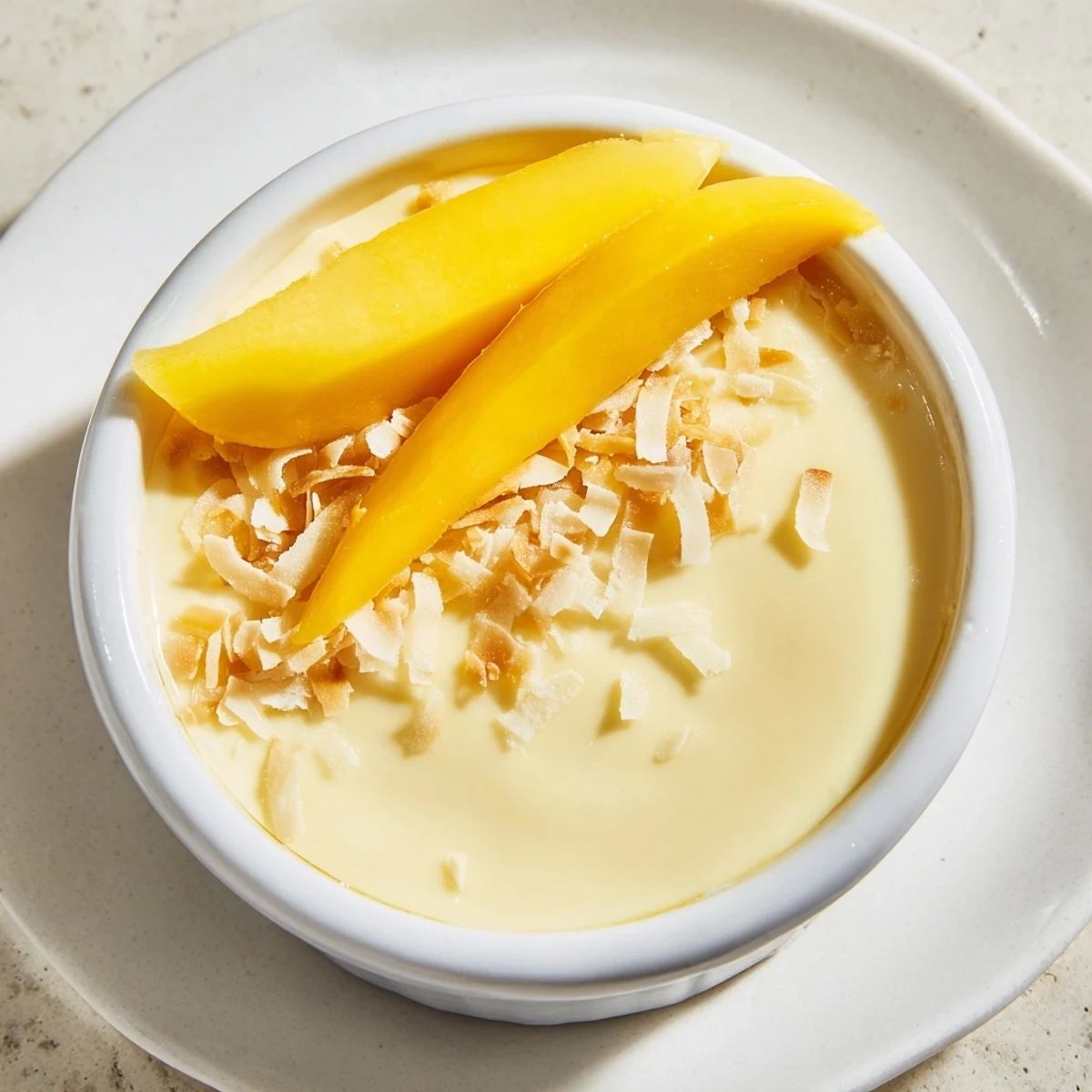
- Sprinkle with toasted coconut right before serving and arrange fresh fruit alongside for a pretty presentation.
 Pin this
 My sister served this at her wedding shower, and guests kept drifting back to the dessert table just to stare at these little cups, not quite believing something so simple could taste so luxurious. That is the magic of this recipe really, it looks like you fussed for hours when actually the steamer did all the heavy lifting.
Getting The Texture Right
The difference between a good coconut custard and a great one comes down to that straining step. I skipped it once when I was in a rush and ended up with tiny white specks throughout the custard, still edible but not that glassy smooth perfection. Now I never skip the sieve, and the extra thirty seconds makes such a difference in the final presentation.
Making Ahead
These custards actually taste better the next day when the coconut flavor has had time to deepen and settle. I often make them the night before serving, covering each ramekin with plastic wrap once they are completely chilled. Just add the toasted coconut and fresh fruit right before serving so nothing gets soggy.
Flavor Variations
While the classic version is hard to beat, I have discovered some wonderful variations through happy accidents in the kitchen. A splash of lime zest adds brightness that cuts through the richness, especially in warm weather. Sometimes I infuse the coconut milk with a bruised lemongrass stalk while it warms, then strain it out before mixing with the eggs for a subtle floral note that feels extra special.
- A pinch of ground cardamom pairs beautifully with the palm sugar
- Swap some of the coconut milk for a little pandan infused milk if you can find it
- Top with crushed salted peanuts instead of coconut for a salty sweet contrast
 Pin this
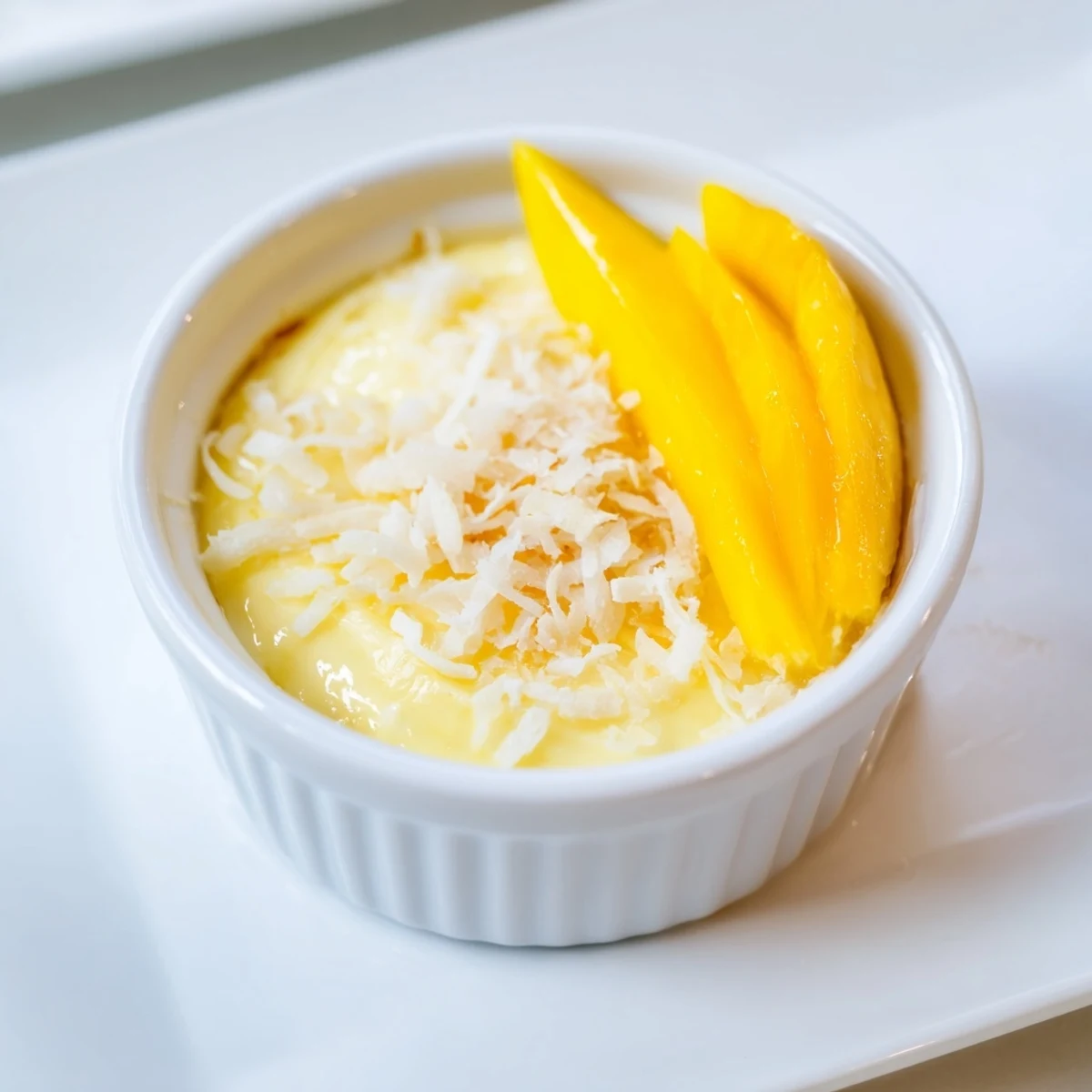
 There is something deeply satisfying about serving dessert that required only a handful of ingredients but delivers such elegance. These little custards have become my go to when I want to end a meal on a memorable note without spending hours in the kitchen.
Recipe FAQs
- → What makes Thai coconut custard different from regular custard?
-
Thai coconut custard uses coconut milk instead of dairy, creating a naturally rich and creamy texture without cream or milk. It's traditionally steamed rather than baked, resulting in a silkier, denser consistency with no browned top.
- → Can I use regular sugar instead of palm sugar?
-
Yes, light brown sugar makes an excellent substitute for palm sugar. It provides similar caramel notes and moisture content. White sugar works too but will yield a slightly less complex flavor profile.
- → How do I know when the custard is done steaming?
-
The custard is ready when it's just set but still slightly wobbly in the center, similar to flan. Insert a toothpick—it should come out mostly clean but with a slight creamy residue. Avoid overcooking, as the texture will become rubbery.
- → Why is straining the mixture important?
-
Straining through a fine mesh sieve removes any egg whites that didn't fully incorporate and eliminates air bubbles. This step ensures a perfectly smooth, silky custard without eggy bits or foam.
- → Can I make this custard ahead of time?
-
Absolutely. This custard actually improves after chilling—the flavors meld and the texture becomes even more silky. Store in the refrigerator for up to 3 days, covered tightly. Add toppings just before serving.
- → What can I use if I don't have a steamer?
-
Create a makeshift steamer by placing a heatproof rack or inverted bowl in a large pot. Add an inch of water, bring to a simmer, and set your ramekins on the rack. Cover tightly with a lid or foil to trap the steam.