
 Pin this
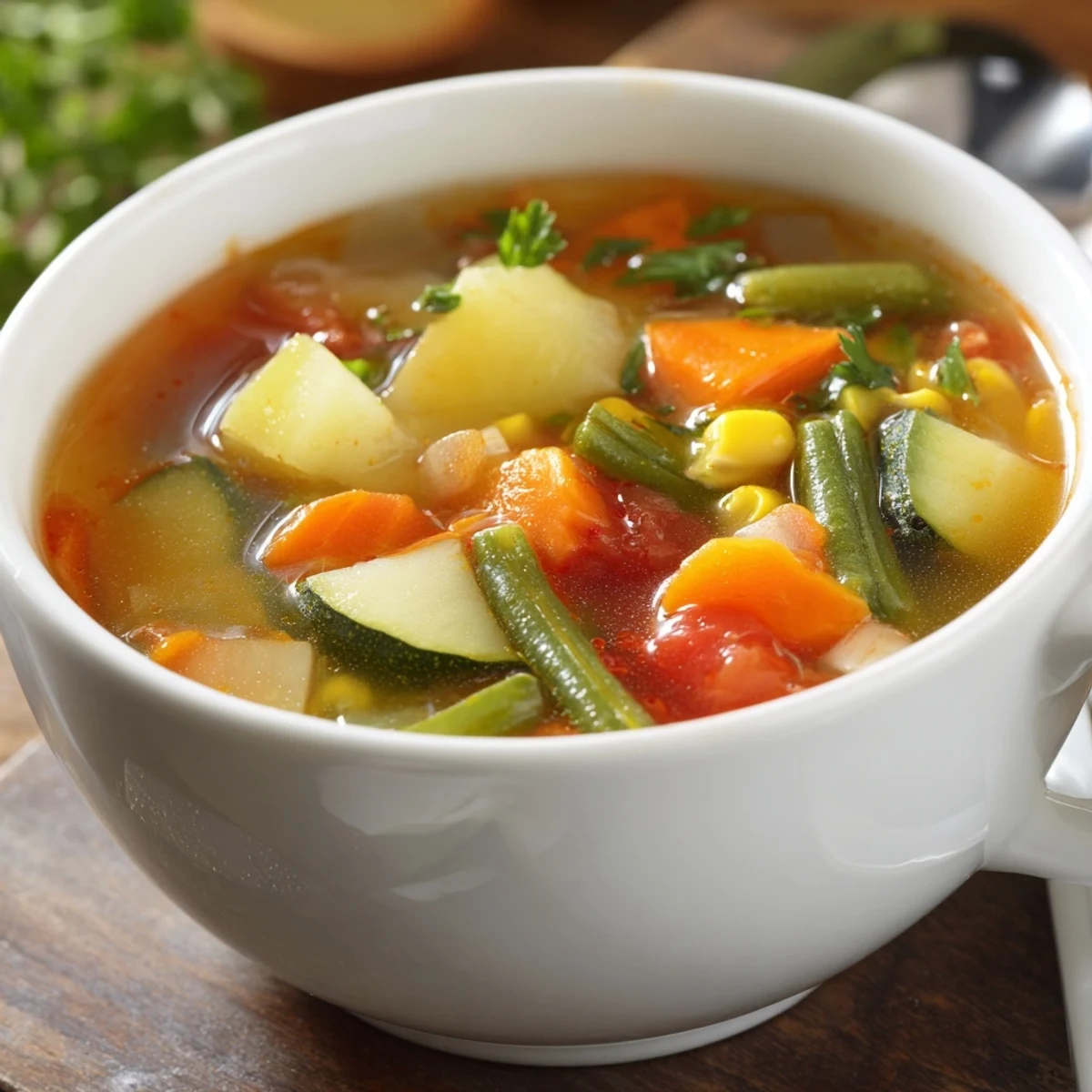
 Begin by gently sautéing onion and garlic in olive oil until translucent, then add carrots, celery and potatoes and cook briefly. Add zucchini, green beans, corn and tomatoes, pour in vegetable broth and stir in thyme, basil and a bay leaf. Simmer uncovered 25–30 minutes until vegetables are tender, then stir in spinach and finish with chopped parsley. Serve hot with crusty bread or a side salad; for extra depth, simmer with a parmesan rind or add cooked pasta or beans for heartiness.
The rain hammered against my kitchen window last October while I stood staring at a drawer full of mismatched vegetables, none of them exciting on their own. Within an hour the whole apartment smelled like something my grandmother might have made, earthy and unpretentious, and I realized the best soup is just whatever needs using up, treated with patience. That pot lasted three days and somehow tasted better each time I reheated it.
My neighbor stopped by one evening while I was ladling a second batch into a mason jar and ended up sitting at my counter eating two bowls straight from the pot, shoes still wet from the rain outside.
Ingredients
- Olive oil: Two tablespoons is enough to soften everything without making the soup greasy, and a good quality one adds a subtle fruitiness you will notice.
- Onion: One medium onion, diced small so it melts into the broth and creates a sweet baseline flavor rather than chunky bits.
- Garlic: Two cloves minced finely, though I often sneak in a third because raw garlic intensity fades as it cooks.
- Carrots: Two peeled and sliced into coins, they bring natural sweetness and a lovely color that makes the bowl inviting.
- Celery: Two stalks chopped, and do not skip this even if you think you dislike celery because it disappears into the background while adding essential savory depth.
- Potatoes: Two medium ones peeled and diced into small cubes so they cook through evenly and thicken the broth slightly as they soften.
- Zucchini: One diced, adding a mild freshness that balances the heavier root vegetables.
- Green beans: One cup cut into bite sized pieces, and fresh ones snap nicely when you trim the ends which is oddly satisfying.
- Corn kernels: One cup fresh or frozen, and frozen works perfectly well here so do not feel pressured to cut kernels off a cob.
- Diced tomatoes: One cup peeled and diced, and canned tomatoes are completely acceptable when good fresh ones are not in season.
- Baby spinach: One cup added at the very end so it wilts gently without turning murky or overcooked.
- Vegetable broth: Six cups, and a good quality boxed broth makes all the difference since it is the backbone of the entire soup.
- Salt: One teaspoon to start, then taste and adjust at the end because you can always add more but never take it away.
- Black pepper: Half a teaspoon of freshly ground is noticeably better than pre ground and adds a gentle warmth.
- Dried thyme: One teaspoon, and this humble herb is what makes the soup taste like it came from a countryside kitchen.
- Dried basil: One teaspoon for a soft herbal sweetness that rounds out the savory notes.
- Bay leaf: Just one, and remember to fish it out before serving because biting into a bay leaf is an unpleasant surprise.
- Fresh parsley: Two tablespoons chopped for garnish, and it adds a bright finish that makes each bowl feel complete.
Instructions
- Wake up the aromatics:
- Heat olive oil in a large soup pot over medium heat until it shimmers, then add the diced onion and minced garlic, stirring often until the onion turns translucent and your kitchen smells impossibly inviting, about three minutes.
- Build the foundation:
- Toss in the carrots, celery, and potatoes, letting them cook for five minutes with occasional stirring so the edges soften slightly and begin soaking up that garlicky oil.
- Add the rest of the garden:
- Stir in zucchini, green beans, corn, and tomatoes, then pour in all six cups of vegetable broth, watching the vegetables bob and swirl as the liquid rises to cover them.
- Season and simmer:
- Add salt, pepper, thyme, basil, and the bay leaf, bring everything to a rolling boil, then immediately reduce the heat to a gentle simmer where small bubbles barely break the surface.
- Let time do the work:
- Simmer uncovered for twenty five to thirty minutes, stirring once or twice, until a fork slides easily through the potato pieces and the carrots yield without resistance.
- Finish with greens:
- Drop in the baby spinach and stir gently for two minutes until the leaves collapse into the broth, then remove and discard the bay leaf before it causes any trouble.
- Taste, adjust, and serve:
- Ladle the hot soup into bowls, scatter fresh parsley over each one, and take a tentative first sip to decide if it needs another pinch of salt or a twist of pepper.
 Pin this
 I once packed this soup in a thermos for a friend recovering from surgery and she called me the next day to say it was the only thing that tasted good to her all week, which meant more than any compliment I have received on fancier dishes.
Making It Your Own
The real magic of this recipe is how accommodating it is to whatever you have on hand, so throw in parsnips, swap sweet potatoes for regular ones, or toss in a handful of kale instead of spinach without overthinking it.
Serving Suggestions
Thick crusty bread torn by hand and dunked straight into the broth turns this from a light meal into something deeply satisfying, and a simple side salad with lemon vinaigrette cuts through the heartiness perfectly.
Storing and Reheating
This soup keeps beautifully in the refrigerator for up to four days and the flavors actually deepen overnight as the vegetables continue releasing their juices into the broth.
- Freeze individual portions in mason jars leaving an inch of space at the top so the liquid can expand without cracking the glass.
- Reheat gently on the stove rather than microwaving because a slow warm preserves the texture of each vegetable.
- Give it a quick stir and taste for salt before serving again since refrigeration can sometimes mute the seasoning slightly.
 Pin this
 Some nights the best thing you can do for yourself is chop vegetables slowly, let the pot simmer, and eat something warm that asks nothing of you but a spoon and a little hunger.
Recipe FAQs
- → How can I thicken the soup without dairy?
-
Gently mash a portion of the cooked potatoes against the pot wall to naturally thicken the broth, or stir in a handful of cooked pasta, rice or beans. Pureeing some of the soup and returning it to the pot also creates a creamier body without dairy.
- → What vegetables can I swap in or out?
-
Use any seasonal vegetables: winter squash, sweet potato, leeks, bell peppers or kale work well. Add firmer roots earlier and delicate greens like spinach near the end to avoid overcooking.
- → How should I store and reheat leftovers?
-
Cool to room temperature and refrigerate in an airtight container for 3–4 days, or freeze up to 3 months. Reheat gently on the stove; add fresh greens at the end to keep them bright. If frozen, thaw overnight in the fridge first for even reheating.
- → How can I boost protein and make it more filling?
-
Add cooked beans or lentils, diced cooked chicken, cubed tofu, or a cup of cooked small pasta. Beans and lentils also contribute fiber and keep the dish plant-forward and hearty.
- → Any tips for seasoning and balancing flavors?
-
Season gradually with salt and pepper while simmering. Brighten the finished soup with a squeeze of lemon or a splash of vinegar to lift the flavors. If using a parmesan rind for depth, remove it before serving.
- → Can I adapt this for a slow cooker or pressure cooker?
-
For a slow cooker, sauté aromatics first, then transfer everything and cook on low 6–8 hours. In a pressure cooker, cook 6–8 minutes on high after adding broth, then quick-release and stir in delicate greens at the end.